

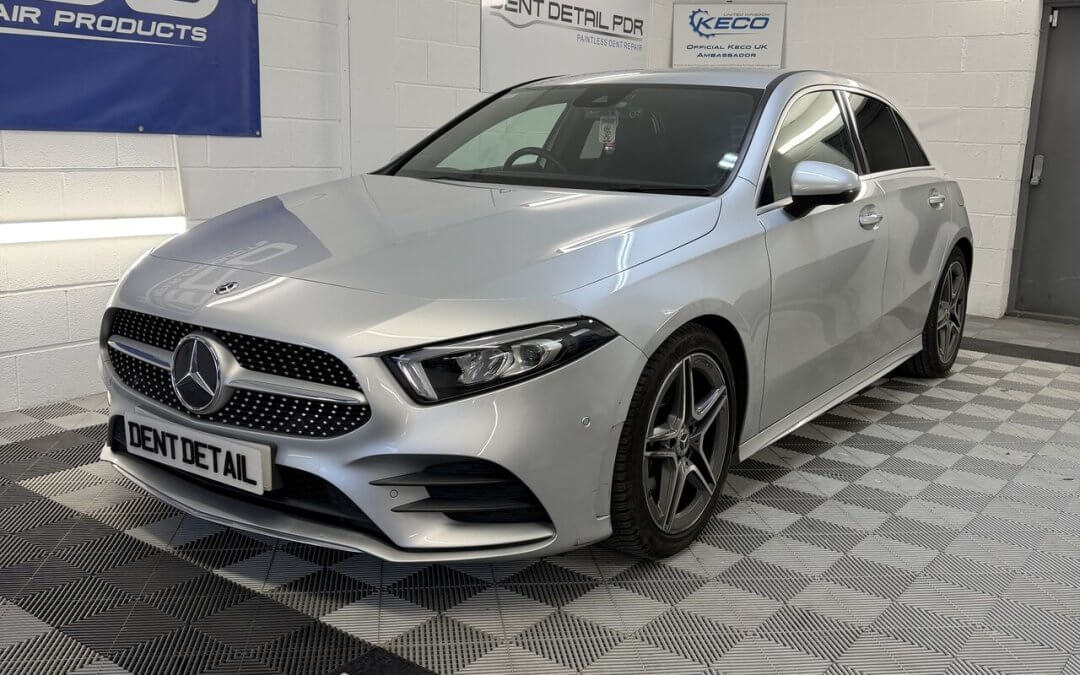
The answer is often yes.
PDR can be an effective way to repair sharp dents and creases, provided the paintwork is suitable and the metal hasn’t been stretched or distorted beyond what can be successfully repaired.
At Dent Detail PDR, we are your IMI-accredited and highly experienced PDR technicians, specialising in restoring complex dents while simultaneously saving the factory finish, preserving the overall value of your vehicle.
In this latest blog, we’ll cover everything you need to know about PDR and fixing creases and sharp dents, including:
- What is Paintless Dent Repair?
- What makes creases and sharp dents difficult?
- The Dent Detail PDR approach: How we fix them
- The checklist: Is your crease a candidate for PDR?
- Why choose PDR over traditional bodyshop repairs?
What Is Paintless Dent Repair (PDR)?
Before we get into the suitability of PDR for creases and sharp dents:
What actually is Paintless Dent Repair?
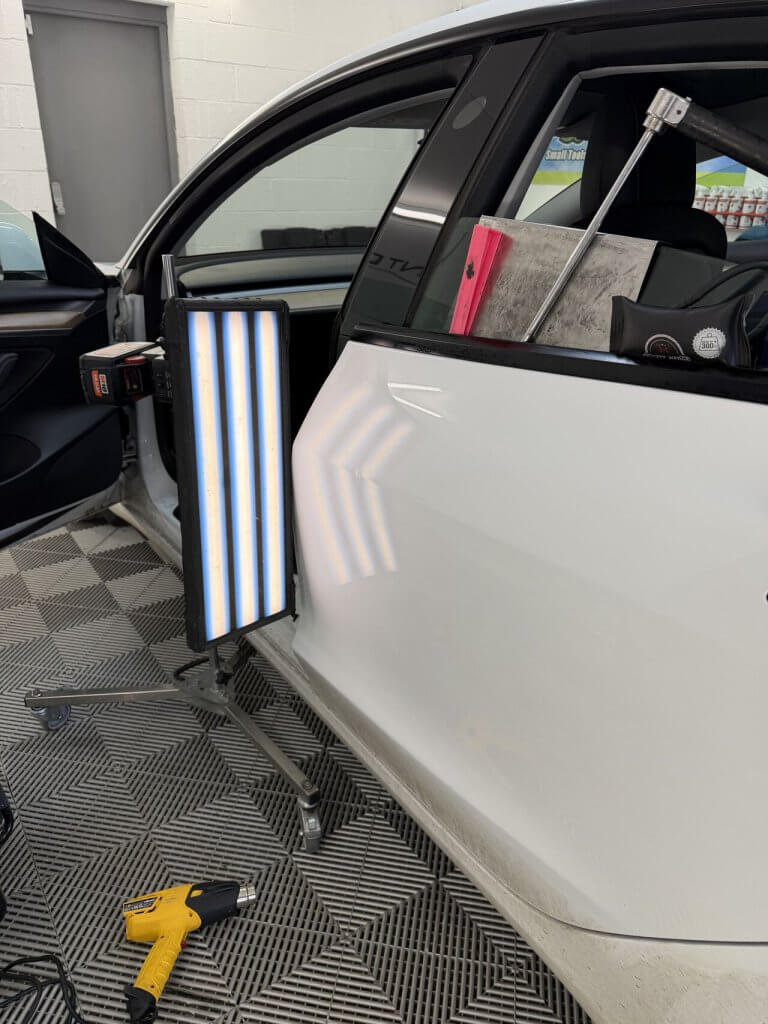
Paintless Dent Repair (PDR) is a specialist technique used to restore dents without the need for conventional body filler or repainting. Using specialist tools, trained technicians carefully manipulate the damaged panel from behind to gradually return it towards its original shape.
Where the damage is suitable for PDR, this can save vehicle owners both time and money compared with a traditional bodyshop repair.
What Makes Creases and Sharp Dents Difficult?
Dent Detail PDR have successfully provided PDR for hundreds of vehicles damaged with creases or sharp dents, but it doesn’t come without its difficulties. A crease creates a concentrated line of deformation in the panel, rather than the broader, smoother shape found in a typical shallow dent. This can create additional tension within the metal and requires careful, controlled manipulation to restore the panel without damaging the paintwork.
Sharp impacts can also create concentrated areas of tension around the deepest point of the damage.
These areas need to be carefully worked and controlled during the repair to gradually restore the panel’s shape.
The Dent Detail PDR Approach: How We Fix Them
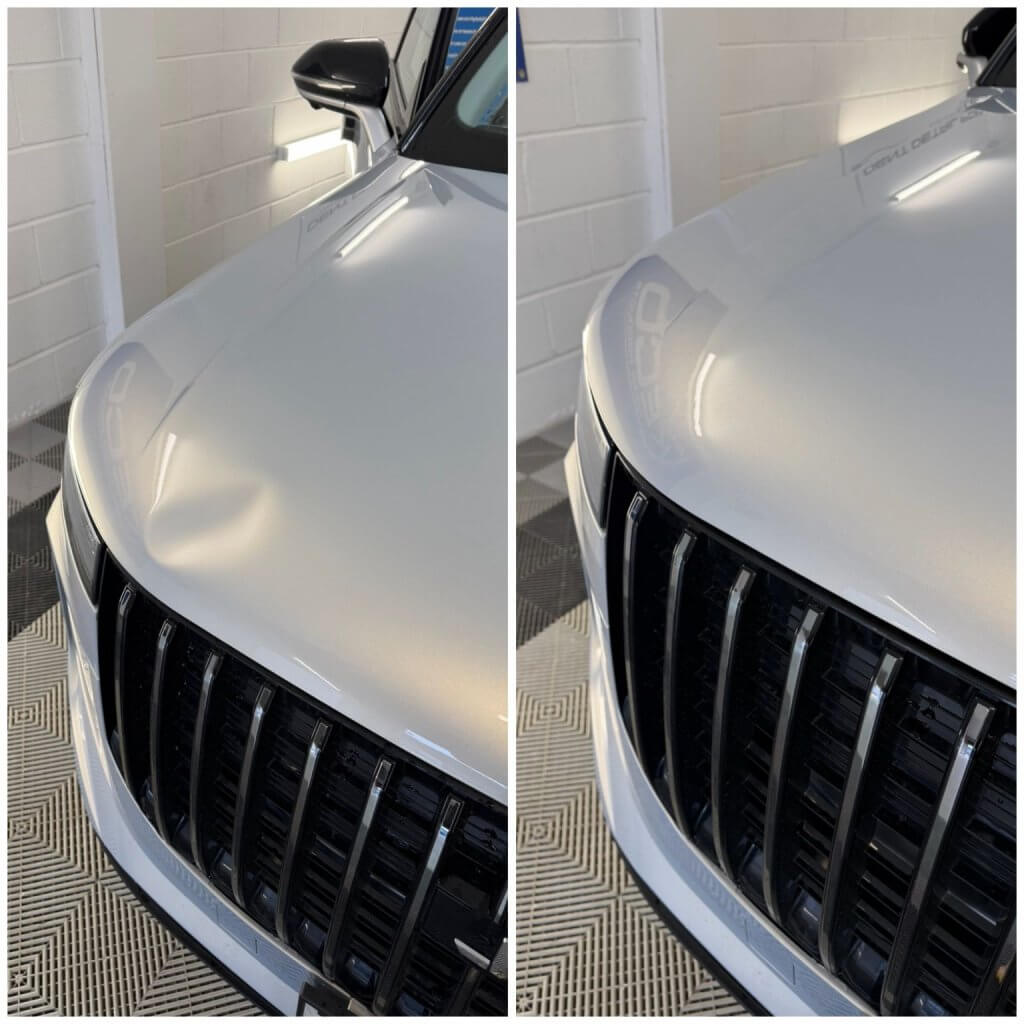
At Dent Detail PDR, we follow a step-by-step approach to remove unsightly creases and sharp dents:
1.) Professional Assessment: Using our WhatsApp service, we ask customers to send 2–3 clear, high-quality images so we can provide an initial assessment of whether the damage may be suitable for PDR.
2. Controlled Repair: Our technicians use specialist PDR techniques and equipment to carefully manage tension within the damaged panel while protecting the paintwork.
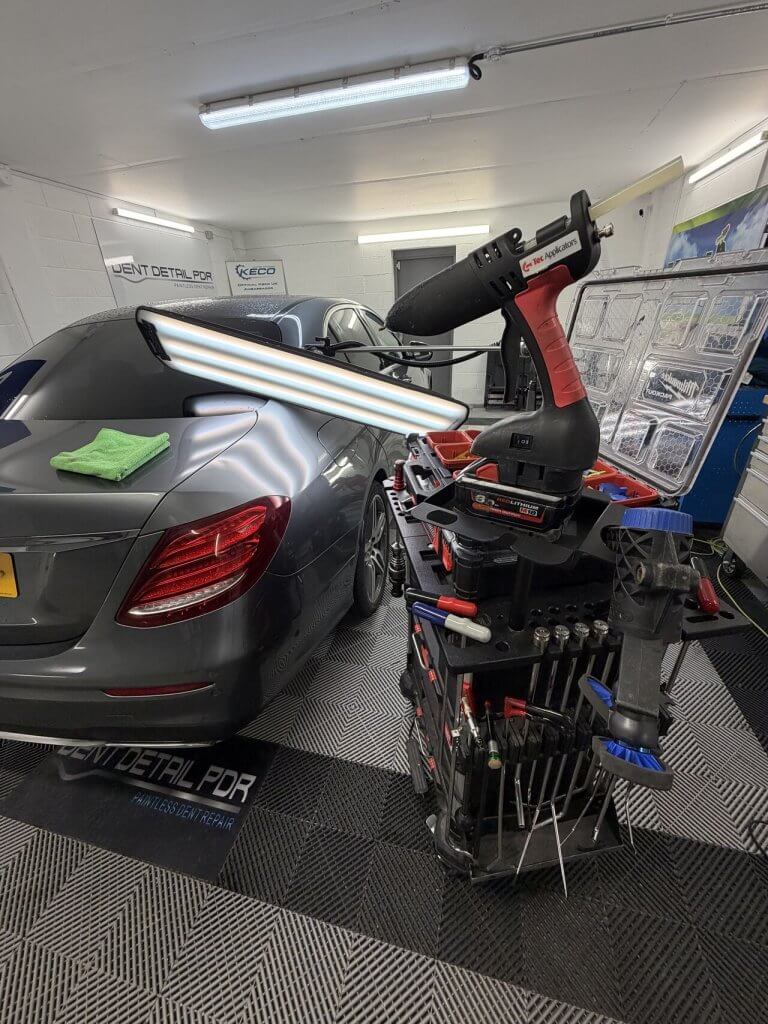
3. Specialist PDR Techniques: Depending on the location, depth and severity of the damage, our technicians may use techniques such as glue pulling, controlled pushing and knockdown methods to carefully restore the panel.
4.) Final Inspection: After the repair, Dent Detail PDR carefully inspects the damaged area to ensure the panel has been restored to the highest possible standard while preserving the vehicle’s original paintwork.
The Checklist: Is Your Crease Or Sharp Dent a Candidate For PDR?
Many creases and sharp dents can be successfully repaired using PDR, although suitability depends on the individual damage.
Here are the three main factors to consider:
- Paint Condition: Is the paintwork intact? PDR works best when the original paint hasn’t cracked, broken or suffered significant damage. If the paint has been damaged, PDR may still be possible, but the existing paint damage would remain and may require separate attention.
- Location: Is there clear access behind the panel where the dent damage is located? This is required for our technicians to use our PDR equipment to massage the dent out of the selected location.
- Depth & Stretch: How deep is the crease, and has the impact stretched or distorted the metal? A deeper crease with significant stretching may be more difficult to repair perfectly with PDR, whereas a crease with limited stretching may be an excellent candidate.
Why Choose PDR Over Traditional Bodyshop Repairs?
PDR isn’t suitable for every type of damage. If the paint is severely damaged, the panel is badly stretched or there is insufficient access behind the dent, a conventional bodyshop repair may be more appropriate.
There are a number of reasons to choose PDR over traditional bodyshop repair, including:
- Cost-Effective: The PDR technique is typically more cost-effective when compared to traditional bodyshop repairs due to the fact that no filler, paint, or excessive equipment is required to handle the repair.
- Time-Efficient: PDR can often be completed within a few hours, depending on the size, location and complexity of the damage.
- Preserve Original Paintwork: Where the damage is suitable for PDR, the repair can be completed without conventional repainting, helping to preserve the vehicle’s original paintwork and factory finish.
- Convenience: PDR, provided by Dent Detail PDR, can be completed at a location of your choice, including on your driveway, at your workplace or at our state-of-the-art workshop.
Contact Dent Detail PDR
Has your vehicle sustained dent damage?
Don’t automatically assume a sharp crease or dent means a trip to the body shop.
Send us 2–3 clear, high-quality images via WhatsApp and our team can provide an initial assessment.
Alternatively, call Dent Detail PDR directly on 07824 426591. We provide PDR services across Leyland, Preston, Wigan, Chorley and the surrounding areas.
Get a Free Quote
Text a clear photo of the dent to 07824 426591 with your vehicle make and model. Graham will reply the same day with an honest price.
Related guides
Which Dents Can Be Fixed with Paintless Dent Repair? →
The Biggest Myths About Paintless Dent Repair →
PDR on Electric Vehicles: Why You Need an Accredited Technician →
Related Questions
What happens if the paint is already cracked or chipped?
Paintless dent repair (PDR) is a method of removing dents, dings, and creases from a vehicle’s bodywork without the need for paint, filler, or replacement panels. A trained technician uses specialist tools to massage the metal back to its original shape from behind the panel, preserving the factory paint finish entirely.
Is Dent Detail PDR IMI accredited?
Yes. Graham holds two IMI qualifications: the IMI Accredited Cosmetic Repair Technician Level 2, confirming formal competence in PDR and related cosmetic repair techniques, and the IMI International Level 2 Award in Electric and Hybrid Vehicle Routine Maintenance. The EV qualification is particularly rare among PDR technicians in Lancashire and Greater Manchester and provides specific assurance for owners of electric and hybrid vehicles.
I have a classic car with a dent – is PDR suitable?
PDR is often the preferred method for classic cars precisely because it avoids repainting. Original factory paint on a classic car is frequently a significant part of the vehicle’s provenance and value. Respraying even a single panel can reduce the car’s authenticity and value to collectors. Where the original paint is intact, PDR allows the dent to be removed without any impact on the vehicle’s originality.
Recent Comments